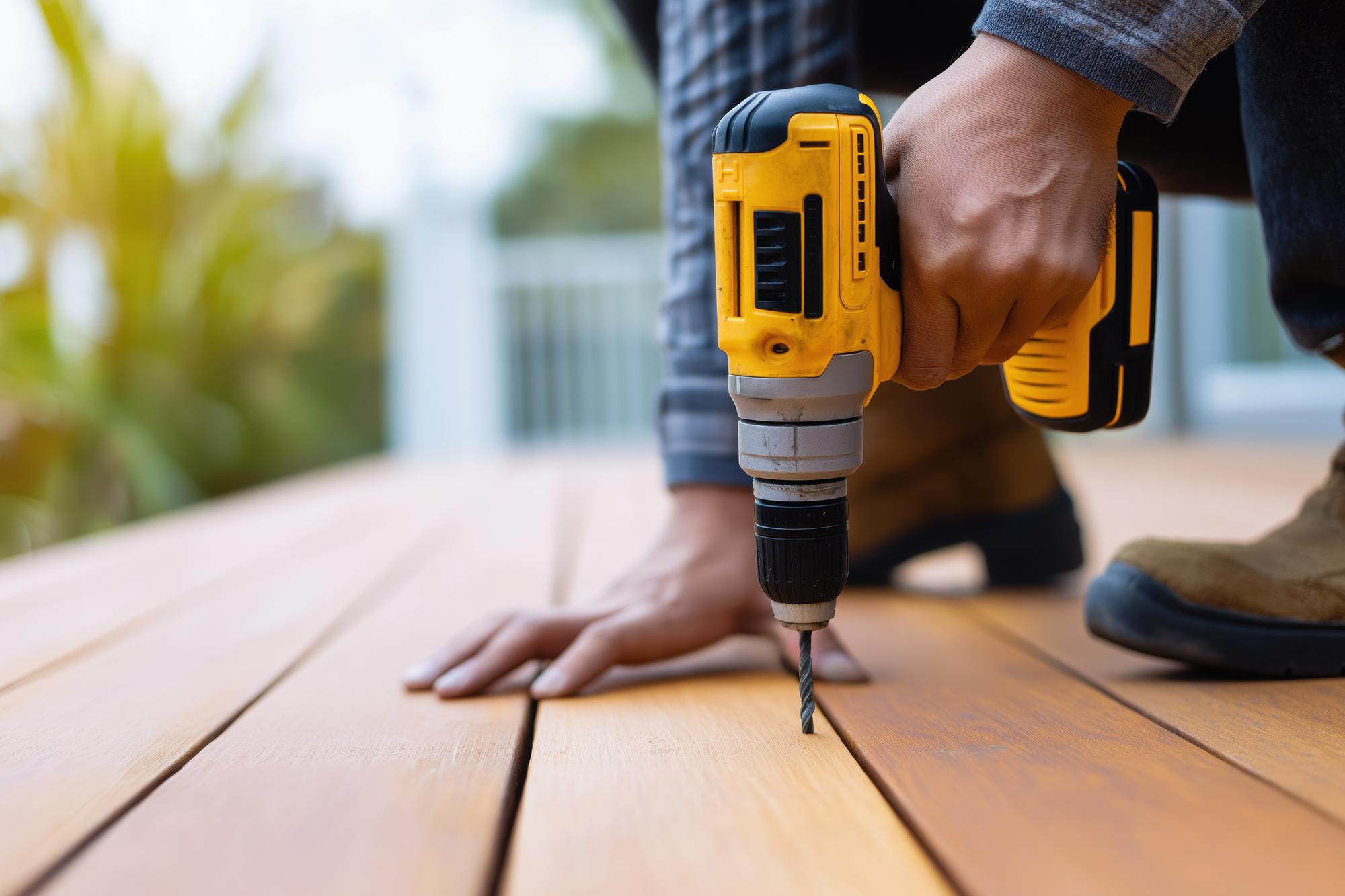
Have you ever stood in front of a wall of power tools and thought, ‘they all look the same’? Well, for most first-time DIYers, you’re not alone.
If you can’t get your head around the differences between an impact driver and a drill, we’re here to help! While these tools do overlap, they’re built to tackle different things. Pick the right one, and weekend DIY will feel easy. Pick the wrong one, and you’ll be fighting it the whole way.
Whether you’re hanging a picture or replacing your garden fence, we’ll help you pick the right power tool for the job with no jargon or DIY knowledge required.
Power tools guide: impact drivers vs drills vs combi drills
Let’s start off simple…
A drill is best for drilling neat holes and light screwdriving.
An impact driver specialises in driving long or stubborn screws that need a lot of twisting force.
A combi drill combines drilling, screwdriving and hammer drilling into one multifunctional tool.
If you want one single tool to handle most home jobs, a combi drill is usually the safest and most cost-effective bet. But if you’ve got a few big projects planned, the above often come as a set in special combo kits. Which means you’ll be ready to tackle almost anything!
Impact driver vs drill driver
Now, for a DIY spot the difference – impact driver vs drill driver. While visually they look similar, they behave very differently once you pull the trigger.
What is a drill driver?
A drill driver is the most common DIY tool. It spins smoothly and gives you plenty of control. You can drill holes in wood, plastic and metal, and you can drive screws at a steady pace. Most drill drivers have an adjustable clutch to prevent you from over-tightening screws.
What is an impact driver?
An impact driver, on the other hand, is a beast. Instead of smooth spinning, it uses quick bursts of rotational force to get the job done. That extra power and torque make it brilliant for driving long screws into tough materials like thick timber or decking boards, but you have less control for any delicate work. Generally, it’s smaller and lighter, but much stronger when it comes to twisting power.
To sum it up:
If you’re hanging a picture or assembling a wardrobe, you need a drill driver.
If you’re building a fence, laying decking or putting up a shed, you need an impact driver.

Impact driver vs combi drill
This is where a lot of people get confused. A combi drill looks like a drill driver, but it can do more. Let’s break things down a bit.
A combi drill has three main modes:
Drilling
Screwdriving
Hammer drilling (for brick and masonry)
Because of this, combi drills are really versatile. You can drill into wood, metal, brick and concrete (as long as it’s not too thick). Then switch over to screw mode to assemble shelves or furniture.
Compared to an impact driver, a combi drill doesn’t hit with sudden bursts of torque. It’s smoother and easier to control, making it a better choice for beginners and great for any smaller indoor jobs. However, unlike an impact driver, a combi drill can struggle with very long screws or dense timber.
Project examples:
Putting up blinds, shelves or curtain poles (combi drill)
Drilling into brick for wall plugs (combi drill – hammer mode)
Driving hundreds of decking screws (impact driver)
Key differences between drills and impact drivers
Here’s how drills and impact drivers differ:
| Feature | Drill / Combi Drill | Impact Drill |
|---|---|---|
| Main role | Drilling holes & light screwdriving | Driving screws with high torque |
| Mechanism | Smooth, continuous rotation | Rotational impacts (twisting bursts) |
| Chuck type | Adjustable chuck (fits many bits) | Hex chuck (quick-change bits) |
| Control | High control with clutch settings | Less control, very powerful |
| Power feel | Steady & predictable | Punchy & aggressive |
| Size & weight | Usually slightly larger | Compact & lightweight |
| Best for | DIY, home projects, drilling | Heavy-duty fastening jobs |
In short, drills are all about precision and versatility. On the other hand, impact drivers are better for tasks that require strength and speed.
When to use an impact driver vs a drill
Still not sure which one you need? If you’re new to DIY, buy a combi drill first. It’ll cover nearly all of those basic home tasks. You’ll be able to hang shelves, drill into walls, build furniture, and fix things around the house.
You’ll need to choose an impact driver if:
You’re working outdoors
You’re driving long screws or bolts
You’re building fences and decking in the garden
Your drill keeps stalling or stripping screw heads
What to use on certain materials:
Wood (drill or impact driver)
Metal (drill)
Brick/masonry (combi drill – hammer mode)
Chunky timber and structural screws (impact driver)

How to use an impact driver
Impact drivers are pretty simple tools. Here are the key things to do:
Use impact-rated bits to prevent breakage
Hold the tool square to the screw
Start slow, then squeeze harder once the screw bites
Let the tool do the work – don’t force it!
Wear ear protection (loud is an understatement)
How to use a drill
Drills are all about control. Do things right, and you should have clean holes and neat finishes every time. And make sure to keep this in mind:
Choose the right drill bit for the material
Tighten the chuck securely
Set the clutch low for delicate screw jobs
Increase the speed gradually when you’re drilling
Keep steady pressure, and avoid using brute force
How to use a combi drill
Combi drills give you plenty of options to suit different jobs. Here’s when to use what:
Select drill mode for making holes in wood and metal
Pick screw mode and adjust the clutch for furniture
Pick hammer mode only for brick and masonry
Mark the drill depth with tape to avoid drilling too deep
Let the hammer action do the hard work on the walls

FAQs
Can you drill a hole with an impact driver?
While you technically can drill a hole with an impact driver, they won’t be as accurate or clean as using a drill or a combi drill.
Can a combi drill go through brick?
Combi drills have a special hammer mode that’s designed to go through brick and light masonry. Use a masonry bit, select hammer mode, then apply some steady pressure. For very hard concrete, a dedicated SDS drill is more effective.
Can a combi drill be used as a screwdriver?
A combi drill can be used as a screwdriver. Use screwdriver bits and adjust the clutch to prevent over-tightening things. This function makes combi drills perfect for furniture, fittings and everyday DIY.
Can you use an impact driver as a drill?
Yes, you can use an impact driver as a drill. But it’s not recommended for most jobs. Impact drivers lack the control and chuck design needed for accurate drilling. They’re best kept for driving long or stubborn screws.