For most of the year, the thoughts of prolonged periods in the garden would give you cold chills. But for those glorious few days or weeks when we get warm sunshine, you can’t stop us from becoming outdoorsy. Want to work from your garden or dine al fresco with some summer tunes blasting, but your Wi-Fi has different ideas?
If your signal drops the moment you step into the garden, don’t worry. There are plenty of ways to extend your Wi-Fi outside, regardless of how big or small your outdoor space is. We’ll give you some of the best ways to boost your signal.
Outdoor Wi-Fi extenders
An outdoor Wi-Fi extender (also called a Wi-Fi booster) is ideal for smaller gardens, patios or your balcony. It’s a quick, easy and affordable way to boost your connection by catching your router’s existing signal and helping push it farther outside. Now you can stream your favourite shows while you soak up some summer sun.
How do Wi-Fi extenders work?
The setup for a Wi-Fi extender couldn’t be easier or faster. All you do is plug the extender into an outdoor-rated power socket or a socket near the door to your garden, and the extender copies your Wi-Fi network and broadcasts it further down the garden. This works best in small to mid-sized gardens where your indoor signal is already strong.
| Pros | Cons |
|---|---|
| Easy to install | Speed drops as you move from the house |
| Affordable | Not great for long gardens |
| Ideal for patios / seating near the house |
Mesh systems
If your Wi-Fi tends to be weak in a few rooms and the garden, a mesh Wi-Fi system might be the best solution for your home. A mesh system uses a set of clever nodes placed around your house (or a garden office) to create one big cloud of coverage.
How does a mesh system work?
The nodes talk to each other, so your phone, laptop or smart TV will automatically connect to the closest one. That then gives you a strong, stable Wi-Fi connection from the kitchen to the end of the garden. This works best in homes with medium or large gardens where the indoor Wi-Fi also needs boosting. It’s also a no-brainer for homes with lots of devices!
| Pros | Cons |
|---|---|
| Fast, seamless roaming | Usually more expensive |
| Great for larger homes & gardens | Nodes need power sockets indoors (and sometimes outdoors) |
| Better performance than standalone extender |
Powerline adapters
Do you have a specific garden office with a weak signal? Once it gets electricity, then a powerline adapter is the solution for you. A powerline adapter uses your home’s electrical wiring to send a strong, wired connection from the router to the garden.
How does a powerline adapter work?
Plug one adapter into a socket near your router and connect it with an Ethernet cable. Once they’re connected, plug the second adapter into a socket in your garden room. This creates a Wi-Fi hotspot or wired port.
| Pros | Cons |
|---|---|
| Very stable | Both sockets need to be on same electrical circuit |
| Great for video calls and remote working | Only works outdoors if power socket is safe & covered |
| Easy to set up |
Starlink
If you live out in the countryside where fibre broadband has yet to hit, or you’re trying to get Wi-Fi at the bottom of a long garden, Starlink is the most powerful option. It uses satellite internet to give you high-speed connectivity without relying on local cables.
How does Starlink work?
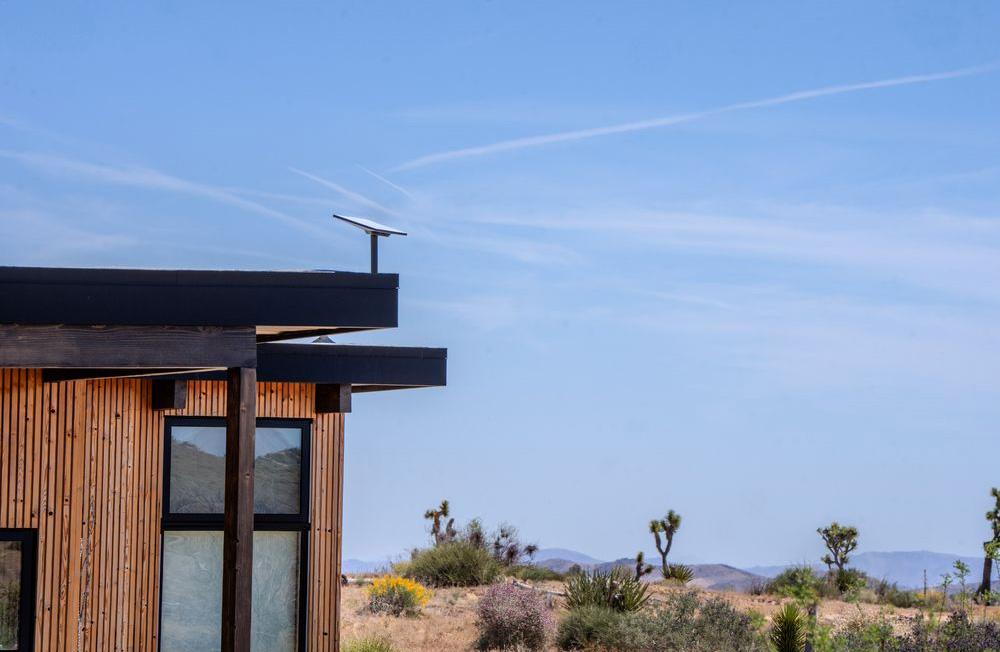
The Starlink Wi-Fi extender works via a small dish on your roof that connects to a set of satellites and beams fast internet straight to your home. As long as you’ve got an open view of the sky, Starlink can reach areas that no normal broadband can, making it best for people living in rural locations or with particularly large gardens out of Wi-Fi range.
| Pros | Cons |
|---|---|
| High speeds, even in remote locations | More expensive than other options |
| Great long-distance coverage | Needs an unblocked view of the sky |
| Ideal for garden rooms and outdoor setups |
FAQs
What’s a good Wi-Fi extender?
A good Wi-Fi extender should be easy to set up. It should support dual-band speeds and have enough range to cover a patio or small garden. If it’s being mounted near outer walls, make sure it’s an outdoor-rated model.
How can I get my Wi-Fi to reach outside?
To get your Wi-Fi to reach outside, you can use outdoor extenders, mesh systems, powerline adapters or mobile broadband. The best option for your home depends on the size of your garden, the strength of your current signal and what you need it for.
Does mesh Wi-Fi improve speed?
Mesh Wi-Fi doesn’t make your broadband faster; it reduces weak spots to create a stable connection and keep speeds strong throughout your home.
What is better, a Wi-Fi extender or a mesh system?
Wi-Fi extenders are cheaper and ideal for smaller gardens. On the other hand, mesh systems cost more but tend to have stronger, more consistent coverage, making them ideal for larger homes and bigger outdoor spaces.
Do powerline adapters have to be on the same circuit?
Yes, powerline adapters have to be plugged into sockets that are on the same electrical circuit. If they aren’t, they won’t be able to communicate properly, and the connection won’t be stable.
Ready to extend your Wi-Fi outside?
Find the perfect networking solution for your home and garden.